Views: 0 Author: Site Editor Publish Time: 2026-03-24 Origin: Site

Clocks have long been essential to human life, providing a reliable means of tracking time. From the earliest sundials to intricate mechanical devices, clocks have evolved alongside advancements in technology, serving both practical and decorative purposes. In recent years, however, digital clocks have become the dominant choice, revolutionizing the way we interact with time. These modern timepieces not only offer exceptional precision but also incorporate a variety of innovative features that cater to the fast-paced nature of today's world. With their sleek designs and multifunctional capabilities, digital clocks are now an indispensable part of our homes, offices, and public spaces. Unlike traditional analog clocks, digital versions provide clearer visibility, enhanced accuracy, and convenient features like alarms, temperature readings, and even projections. This article delves into the diverse types of clocks available today, with a particular focus on the increasing popularity and versatility of digital clocks. Whether for practical use or aesthetic appeal, digital clocks have proven to be both functional and stylish, adapting to the needs of modern living.
Clocks can generally be categorized based on their mechanism, functionality, and design. While traditional clocks used mechanical gears and springs to track time, modern clocks are classified into the following categories:
Analog Clocks: These clocks have traditional clock faces with hands that rotate around a dial.
Digital Clocks: These clocks display the time using numeric digits, often on an LED or LCD screen.
Smart Clocks: A more advanced category of digital clocks that connects to Wi-Fi and integrates with other smart devices.
Atomic Clocks: Known for their unparalleled accuracy, atomic clocks rely on the vibrations of atoms to measure time.
This classification sets the stage for understanding the role of digital clocks, which have become a dominant presence in homes, offices, and specialized environments. Let’s dive deeper into the world of digital clocks.
Digital clocks have revolutionized timekeeping by replacing the traditional analog clocks with a more modern and precise way of displaying time. These clocks use numeric digits on a screen rather than moving hands. They can be powered by either batteries or electrical outlets and are typically designed with an LED or LCD screen.
Digital clocks function by converting the passage of time into numerical digits. The time is displayed on the screen in formats such as 12-hour or 24-hour. Some digital clocks are equipped with an alarm function, while others also feature additional elements like temperature or humidity monitoring.
LED or LCD Screen: This is the primary display area where the time is shown.
Microcontroller: Responsible for regulating the clock’s functionality, often linked to an internal chip that keeps time.
Alarm System: Most digital clocks come with an alarm that can be set for various times.
Power Source: Digital clocks can be powered either by a battery or plugged into an electrical outlet.
Time Display: This is the main function of the digital clock.
Alarm Functionality: Most digital clocks come with the ability to set alarms.
Temperature and Humidity Monitoring: Some digital clocks also include sensors for indoor climate monitoring.
Projection Capabilities: Certain digital clocks can project the time onto walls or ceilings, providing greater visibility.
Digital clocks come in a variety of styles, each offering unique features to cater to different user needs. Here are the most common types of digital clocks available:
These clocks serve the fundamental purpose of displaying time, with additional features like alarms and sometimes a snooze button. They are simple, easy to read, and affordable, making them the most common type of digital clocks in homes.
Projection clocks go a step further by projecting the time onto a wall or ceiling. This feature allows for easy reading of the time, even from across the room. They are particularly popular in bedrooms, where they can be viewed without turning one's head.
These digital clocks combine timekeeping with other functionalities, such as:
Temperature Monitoring: Displaying the current temperature along with the time.
Humidity Levels: Useful for monitoring indoor air quality.
Calendar Functions: Displaying the date and sometimes the day of the week.
These clocks connect to your smartphone or other smart devices. They may allow you to stream music, control home lighting, or even connect with voice assistants like Amazon Alexa or Google Assistant.
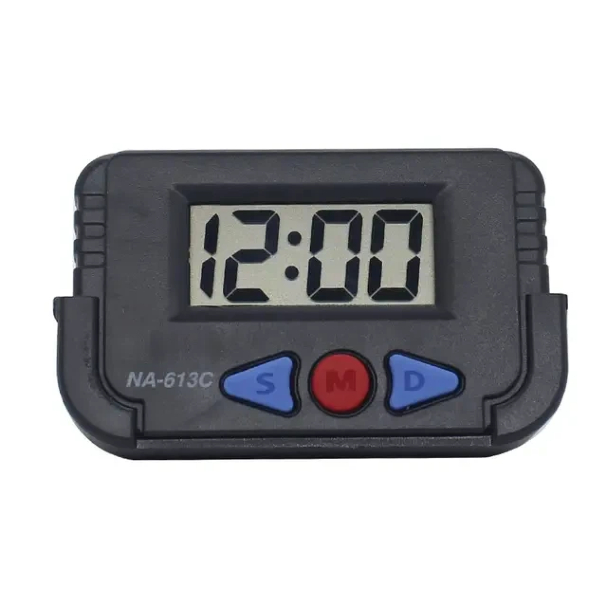
Miniature digital clocks are designed for portability. These small clocks are often used as travel alarms or for places where space is limited, such as on a bedside table or in a small office.
LED wall clocks are larger than regular digital clocks and are used in commercial and office settings. These clocks often display the time in a large, easy-to-read format and can be seen from a considerable distance.
Feature | Digital Clocks | Analog Clocks |
Time Display | Numeric digits on an LED or LCD screen | Rotating hands on a clock face |
Accuracy | Highly accurate, often with atomic or GPS syncing | Can be less accurate, especially with old mechanisms |
Ease of Use | Simple to read with large digits | Requires interpretation of clock hands |
Additional Features | Alarms, temperature, humidity, projections | Generally only time display |
Power Source | Battery or electrical outlet | Battery or mains-powered |
Digital clocks are far more precise and convenient compared to analog clocks. The ease of readability and additional features make them particularly useful for modern living.
Digital clocks have wide-ranging applications, from home use to commercial settings. Here are some of the most common uses:
Bedroom: Digital clocks are often used as alarm clocks. The clear, easy-to-read display makes them ideal for waking up in the morning.
Kitchen: Digital clocks with built-in timers are perfect for cooking and meal preparation.
Living Room: Decorative digital clocks with projectors or ambient lighting are becoming common in living rooms, offering both functionality and style.
Meeting Rooms: Digital clocks are used in offices for time tracking, especially for managing meetings and schedules.
Employee Time Clocks: Many businesses rely on digital clocks for time tracking purposes, as they are more accurate and easier to integrate with payroll systems.
Countdown Timers: Many digital clocks are used in gyms or fitness centers as countdown timers for workouts.
Medical Settings: In hospitals, digital clocks help maintain schedules and monitor time-sensitive tasks.
Outdoor digital clocks are designed to be weatherproof, making them ideal for public spaces, stadiums, and street signage.
As technology continues to evolve, so do digital clocks. The future of digital clocks looks promising, with several innovations on the horizon.
The integration of smart home technology is one of the key trends in digital clocks. In the future, digital clocks may:
Sync with smartphones and other smart devices
Feature voice control, allowing users to set alarms or check the weather without touching the clock
Include integrated lighting or environmental controls, such as smart thermostats
Manufacturers are focusing on eco-friendly designs, using materials that are both durable and sustainable. Additionally, the design of digital clocks is becoming more minimalistic, with sleek, modern aesthetics that blend well with home decor.
In conclusion, digital clocks have become an essential part of our daily lives, offering unmatched precision and functionality. Whether for home, office, or outdoor use, these clocks come in various types, from basic time display models to advanced multifunctional smart clocks. With their ease of use, added features like temperature monitoring and alarm systems, and stylish designs, digital clocks are a superior choice for modern timekeeping.
If you are looking for high-quality digital clocks to suit your needs, we invite you to explore the diverse range of products offered by Fuzhou Greathome Manufacture Co., Ltd. Our collection includes a variety of digital clocks designed for both practical use and aesthetic appeal, ensuring that you find the perfect solution for your space. Whether you're interested in basic models or multifunctional options, we offer customizable solutions to meet your specific requirements. Don’t hesitate to get in touch with us for more information or to discuss your needs further. We look forward to helping you find the ideal digital clock for your home or business.
Analog clocks use rotating hands on a clock face to display time, while digital clocks show time through numeric digits. Digital clocks are more precise and easier to read, especially for those with visual impairments.
Digital clocks offer clear visibility, are more accurate, and often come with additional features such as alarms, temperature readings, and projections. They are also easier to maintain compared to traditional analog clocks.
Yes, most modern digital clocks allow users to set multiple alarms, making them convenient for individuals with varying schedules.
A projection digital clock works by projecting the time onto a wall or ceiling. This feature makes it easier to see the time from a distance, particularly in the dark.
Yes, there are outdoor digital clocks designed to withstand weather elements. These clocks are often used in public spaces and outdoor settings where durability is essential.


