Views: 0 Author: Site Editor Publish Time: 2026-07-28 Origin: Site

One second can erase hours of brilliant chess. When your chess timer reaches zero, you usually lose by time forfeit. However, a draw applies if your opponent cannot possibly deliver checkmate. This guide explains flag fall, insufficient mating material, tournament claims, online results, and practical ways to avoid time trouble.
A chess timer contains two connected clocks, but only one side counts down. After moving, a player presses their button, stopping their time and starting the opponent’s. This cycle continues until the game ends or one player misses the required time control.
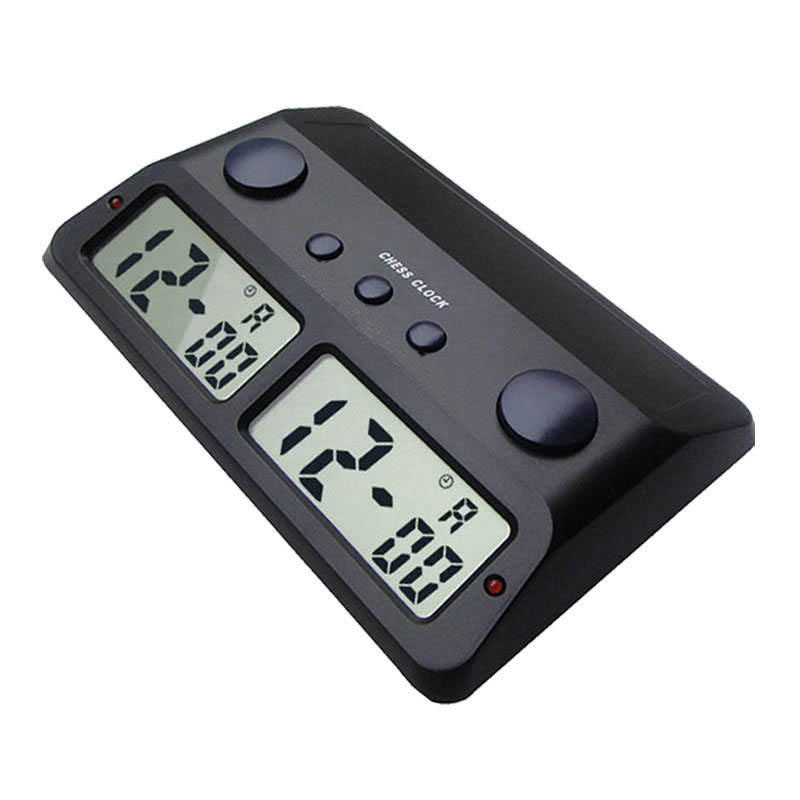
When a digital display reaches zero, it normally shows a flag symbol or expiration signal. An analog clock uses a small physical flag near the top of its dial. “Flag fall” is chess language for the moment a player’s allotted time expires.
Players should distinguish expiration from a low-time warning. A beep may signal ten remaining seconds, while zero records actual expiry. Sound can also be muted, making visual monitoring essential.
Under the FIDE Handbook FIDE Laws of Chess taking effect from 1 January 2023, failing to complete the prescribed moves within the allotted time normally loses the game. Material advantage does not rescue the flagged player. You can have a queen, two rooks, and a winning attack, yet still lose on time.
The basic sequence is simple:
1. You make a move while your clock is running.
2. You press the clock after completing the move.
3. Your opponent’s timer begins counting down.
4. If your time expires first, your opponent usually wins.
However, the board can end the game before the clock does. Checkmate finishes the game immediately, provided it was legally completed before flag fall. Resignation, stalemate, and certain draw conditions can also end play before a later timeout claim.
Established in 2008, GreatHome produces timers and other timekeeping products in Fuzhou, China. Its digital models illustrate why modern clocks are easier to judge. Clear dual displays, precise countdowns, and expiration alerts make the remaining time visible to both players.
A clock records time; it does not decide every legal result. The arbiter, tournament rules, or online platform applies the result. That distinction becomes important when the opponent lacks any possible route to checkmate.
The main exception is often called timeout versus insufficient mating material. A flagged player does not lose when the opponent cannot checkmate by any possible series of legal moves. In that situation, the game is drawn.
This rule asks whether checkmate is legally possible, not whether it is likely. It also does not ask whether the remaining player can force mate against perfect defense. A strange sequence of legal mistakes may be enough under FIDE rules.
Material held by the player still having time | Typical timeout result against a bare king | Reason |
King only | Draw | A lone king cannot checkmate |
King and bishop | Draw | Those pieces cannot mate a bare king |
King and knight | Draw | Those pieces cannot mate a bare king |
King and rook | Win on time | A legal checkmate is possible |
King and queen | Win on time | A legal checkmate is possible |
Board details still matter. A bishop or knight may become enough when the flagged side retains another piece. That extra piece can sometimes block an escape square, making a legal mating position possible.
Online platforms may use automated material rules instead of analyzing every possible legal sequence. Their handling of two knights, blocked pawns, or unusual positions may differ. The My opponent ran out of time. Why was it a draw? shows how one major platform applies insufficient-material results.
Federations can also differ. FIDE focuses on whether any legal mating sequence exists. Some national rules examine listed material combinations or whether a win can be forced from the final position.
Therefore, avoid memorizing one oversimplified slogan. “Zero means loss” is usually correct, but it misses an important exception. Before a rated event, read its published regulations and ask which federation’s rules apply.
If a casual game uses house rules, players may agree to continue after zero. That choice is fine among friends. It does not change the official meaning of flag fall in tournament chess.
In over-the-board chess, a flag fall must be properly noticed. FIDE treats the flag as fallen when the arbiter observes it or a player makes a valid claim. A digital beep can attract attention, but the competition rules still govern the procedure.
If you notice your opponent’s time has expired, remain calm. Do not move pieces to demonstrate a winning line. Stop the clocks if the event rules allow it, then call the arbiter and state the claim clearly.
The arbiter checks three main questions:
Which flag fell first?
Had the game already ended through checkmate or another result?
Could the player retaining time checkmate through any legal sequence?
Situation | Usual ruling |
One flag falls and the opponent can legally mate | Flagged player loses |
One flag falls and the opponent cannot legally mate | Game is drawn |
Checkmate was completed before the flag fell | Checkmating player wins |
The clock has an evident defect | Arbiter replaces or adjusts it |
Both flags are down and order is uncertain | Ruling depends on the time-control period |
Both flags showing zero does not always create an automatic draw. If officials can establish which flag fell first, they can apply that result. When the order cannot be established, FIDE distinguishes the final time-control period from earlier periods.
Do not repair, reset, or change the timer yourself during a dispute. An incorrect setting, low battery, or obvious malfunction needs an arbiter’s decision. The arbiter may replace the device and reconstruct the times using available evidence.
Spectators should not intervene in an active game. They should contact an arbiter quietly when event rules permit. Players, meanwhile, should watch both the board and their own remaining time.
Online chess handles this process automatically. The server records the exact timeout and immediately assigns a result. If the result seems wrong, save the game record and use the platform’s appeal process.
The normal timeout principle remains similar across classical, rapid, and blitz chess. A player must complete the required moves before their time expires. What changes is the speed, the claim procedure, and the likelihood of practical mistakes.
Format | Typical clock pressure | Common risk |
Classical | Long thinking periods | Spending too much time on one critical position |
Rapid | Limited recovery time | Reaching the endgame with seconds remaining |
Blitz | Constant time pressure | Missed tactics, illegal moves, or late clock presses |
Online | Automatic timing | Connection delay, premove errors, or platform rules |
Digital clocks can soften time pressure through increment or delay. Fischer increment adds a fixed number of seconds after each completed move. Bronstein delay returns some used time, up to a preset limit, after the move.
Neither system makes a timeout impossible. A player can still consume the main time and the added allowance. However, these modes reward prompt decisions and reduce frantic endings caused by zero-increment controls.
GreatHome’s Professional Electronic Chess Timer from China manufacturer supports basic time, increment, and delay modes. Its listed features include dual LCD screens, low-time alerts, and an expiration signal. These functions help players recognize danger before the chess clock reaches zero.
Tournament organizers must configure every stage accurately. A control might require forty moves, followed by added time for the remaining game. Selecting the wrong mode can create disputes even when the device operates perfectly.
Online chess removes physical button presses, yet introduces other concerns. The server’s clock is authoritative, and lag policies vary between platforms. Players should understand whether premoves consume time and how disconnections affect the clock.
Practice should match the intended format. A player entering a 5+3 blitz event gains little from practicing only untimed games. Regular exposure builds clock awareness alongside calculation skill.
Time management begins before the first move. Confirm the starting time, increment, delay, and number of stages. Test both clock buttons, inspect the battery indicator, and place the device where each player can reach it comfortably.
During the game, treat time like another piece. You may spend more on a critical position, but every long think needs a reason. Save a practical reserve for checks, captures, threats, and technical endgames.
Use this simple routine:
Check the clock after every few moves. Connect the glance to a regular board habit. This prevents sudden surprises during a complicated position.
Choose a decision deadline. If analysis remains unclear, select the safest practical move. A good move played on time beats perfection found too late.
Press correctly after each move. Use the same hand used to move the piece. Never hover over the clock or forget to end your turn.
Practice under realistic controls. Review where most time disappeared afterward. Repeated patterns reveal opening gaps or calculation habits.
Use increment wisely. Play steady moves while preserving a small reserve. Do not assume future increments can repair a nearly empty clock.
Equipment also affects awareness. Large digits, stable buttons, accurate timing, and clear mode labels reduce avoidable errors. Low-time indicators help, but tournament rules may require silent operation.
Clubs, schools, and organizers can review the GreatHome Professional Tournament Chess Timers with Dual Display - GreatHome for simple and multi-function models. Match the timer to the players, format, and governing rules. Beginners need easy controls, while tournaments may require configurable stages and precise increments.
Finally, rehearse the claim procedure before competition. Knowing when to stop the clock and call an arbiter prevents panic. Good clock habits protect strong chess from an unnecessary loss on time.
Coaches can reinforce these habits through short pressure drills. Begin from common endgames, reduce the available time, then review both moves and clock use.
A chess timer reaching zero usually means a loss, even from a winning position. The key exception is simple: the result is drawn when the opponent cannot legally checkmate. Learn the governing rules, practice realistic time controls, and use a clear, reliable timer. Strong clock management keeps your best moves alive.
A: Usually, but the game is drawn if the opponent cannot legally deliver checkmate.
A: No. A lone king cannot checkmate, making the timeout a draw.
A: The ruling depends on which flag fell first and the time-control period.
A: Yes, when legal checkmate was completed before the flag fell.
A: No. It adds time, but a player can still reach zero.