
A digital clock is a timekeeping device that displays the time in numeric form rather than through rotating hands, which is typical of analog clocks. Digital clocks provide users with a clear, precise, and easily readable display of time, usually in the form of hours, minutes, and seconds. Some modern versions may also show additional information such as temperature, date, or even project the time onto a surface.
Digital clocks are essential in today’s world due to their ease of use and modern features. They have become commonplace in homes, offices, schools, and public spaces, offering more than just the basic function of timekeeping. Their precise time display and additional features make them more versatile and useful than traditional analog clocks.
The evolution of clocks has seen a dramatic shift from mechanical to digital, with the introduction of digital time displays in the mid-20th century. This transformation has made timekeeping more accurate and accessible to users across various sectors. Early digital clocks were powered by vacuum tubes, but advancements in technology have led to the creation of more energy-efficient and affordable devices, such as LED and LCD digital clocks.
Understanding the mechanics behind digital clocks helps us appreciate the technology that powers them. A digital clock relies on various components that work together to display accurate time.
A digital clock uses an electronic circuit to keep track of time and display it digitally. The primary component responsible for this is a quartz oscillator or an atomic time source. These oscillators are highly accurate timekeepers that vibrate at a specific frequency, allowing the clock to maintain precise time.
The most common technology used in digital clocks is quartz oscillators, which are reliable and cost-effective. These oscillators create a consistent frequency, which is divided down to represent time in hours, minutes, and seconds. More advanced models use atomic timekeeping, providing even higher accuracy.
Technology | Accuracy | Cost | Usage |
Quartz Oscillator | +/- 0.5 seconds per day | Low | Most consumer digital clocks |
Atomic Timekeeping | +/- 1 second in 100 million years | High | High-precision clocks |
Digital clocks can be powered in a variety of ways, depending on their design and usage. The most common power sources for digital clocks are:
Battery-operated: Most portable or small-sized clocks are powered by batteries. These clocks typically last for months or even years on a single set of batteries.
Plug-in: Larger digital clocks or wall-mounted clocks often use AC power, which ensures a constant power supply.
Solar-powered: With growing environmental awareness, some clocks are designed to run on solar power, especially those meant for outdoor use.
Digital clocks come in several types, each offering unique features suited for different environments and needs.
LED (Light Emitting Diode) digital clocks are the most common type of digital clock. They offer bright, clear displays that are easy to read, even from a distance. These clocks are often used in places that require high visibility, such as public transport stations or gymnasiums.
LCD (Liquid Crystal Display) clocks consume less power compared to LED clocks, making them a popular choice for battery-operated devices. These clocks are widely used in households and office environments due to their energy efficiency.
Smart digital clocks are integrated with modern technology. These clocks may include features such as Wi-Fi or Bluetooth connectivity, allowing them to sync with other smart devices like smartphones or voice assistants (e.g., Amazon Alexa or Google Assistant). Some models even offer remote control capabilities through apps.
Projection clocks can project the time onto a wall or ceiling, which is especially useful for bedside use. These clocks often have a rotating lens to adjust the projection angle and can be set to display the time in a comfortable view, eliminating the need to turn on lights in the middle of the night.
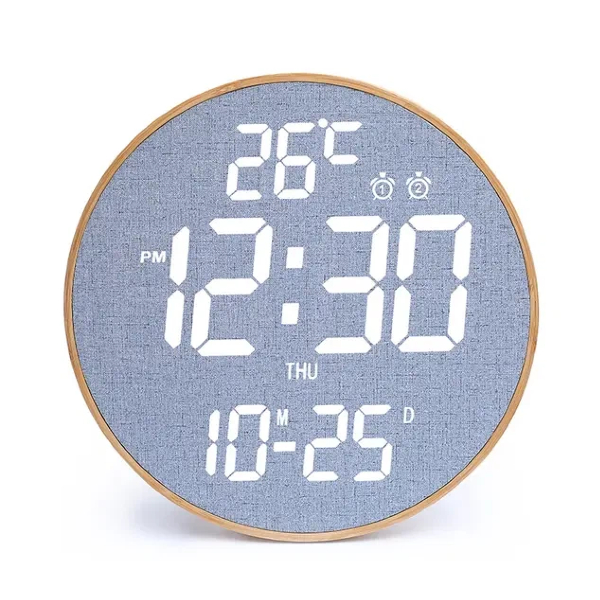
Modern digital clocks are equipped with a range of features designed to enhance usability, functionality, and customization.
One of the standout features of digital clocks is the ability to display time in 12-hour or 24-hour formats. This flexibility allows users to select the format they prefer, depending on their location or specific needs. Some clocks also offer an option to show the time in different time zones, making them useful for international travelers.
Many digital clocks go beyond just timekeeping by providing additional useful information such as:
Temperature: Built-in thermometers can display the current room or outdoor temperature.
Humidity: Some clocks are equipped with sensors to show relative humidity levels.
Calendar: Certain models display the date, making them a more comprehensive tool for everyday planning.
Digital clocks typically come with customizable alarm features. Users can set the alarm to ring at a specific time, and in many cases, they can also customize the alarm sound. The snooze function allows users to delay the alarm for a few extra minutes, making it easier to wake up gradually.
Modern digital clocks come in a variety of designs to suit different tastes and needs. Some clocks feature minimalist designs, while others may incorporate colorful displays, making them an ideal addition to the decor of any room. Additionally, some digital clocks are designed to be wall-mounted, while others are made for desk or bedside use.
Digital clocks offer several advantages over traditional analog clocks, making them an attractive choice for both home and business use.
Digital clocks provide highly accurate timekeeping, often to the second, thanks to the use of quartz oscillators or atomic timekeeping. Unlike analog clocks, there are no mechanical gears that can wear out or cause discrepancies in time.
Digital clocks are incredibly easy to read, thanks to their large, clear numerical displays. Users don’t need to interpret the position of clock hands, as they simply read the numbers displayed. This is especially helpful for older adults or people with visual impairments.
Digital clocks are designed to be readable even in low-light settings. Many models come with adjustable brightness settings or built-in night modes, ensuring that the time is visible at all hours of the day.
With a range of display options, alarm settings, and even color choices, digital clocks offer unparalleled customization. Users can choose clocks that match their room's decor, adjust settings to suit their daily routines, and even use their clocks as tools for time management.
Digital clocks are versatile devices that are used across many different environments. Here’s a look at how they can be integrated into various settings.
Digital clocks are commonly used in bedrooms, kitchens, and living rooms. For example, bedside digital clocks are popular due to their ease of use and additional features like alarm functions and temperature displays. In kitchens, digital clocks with built-in timers are indispensable for cooking.
In office settings, digital clocks help workers keep track of time during meetings, presentations, or working hours. Many office digital clocks are designed with large displays for better visibility and some include calendar features for quick scheduling.
In educational settings, digital clocks are often used in classrooms, gymnasiums, and libraries. These clocks provide precise timekeeping for class schedules, exams, and sports events. Additionally, digital clocks are frequently used for teaching time management skills.
Digital clocks are widely used in airports, train stations, and in vehicles. They provide travelers with precise time information, helping them stay on schedule during their journeys. In vehicles, digital clocks are also used to provide essential time data for navigation and planning.
When purchasing a digital clock, it’s important to consider the specific needs of the user and the environment. The following factors can help in choosing the right model:
Before purchasing a digital clock, consider which features are most important to you. If you need an alarm, choose a clock with a reliable alarm function and customizable settings. If you want more information, select a model with a built-in thermometer or calendar.
Different environments require different types of digital clocks. A wall-mounted clock may be ideal for a large office, while a bedside clock should feature a snooze button and low brightness settings. Consider how the clock will be used before making a purchase.
Digital clocks come in a wide range of prices. While basic models are relatively affordable, more advanced features like smart connectivity, large displays, and projection functionality may come with a higher price tag. Ensure that the features align with your budget.
Digital clocks are essential tools that provide practical, reliable, and accurate timekeeping, making them a valuable addition to various settings such as homes, offices, and educational environments. With features like alarms, temperature displays, and smart connectivity, these clocks offer unmatched convenience and functionality. Their versatility allows them to seamlessly integrate into modern lifestyles, helping users manage time effectively while staying connected with other smart home devices.
At Fuzhou Greathome Manufacture Co., Ltd., we specialize in crafting high-quality digital clocks that cater to diverse needs. Whether you require a simple bedside clock, a multifunctional office display, or a smart clock integrated with your home automation system, we provide tailored solutions that meet your expectations. Our products are designed to be both practical and stylish, offering precise timekeeping while enhancing your space.
For more information on our range of digital clocks or to discuss how we can meet your specific requirements, feel free to reach out to us. We are here to help you find the perfect digital clock that fits your needs and lifestyle.
1. What is the difference between LED and LCD digital clocks?
LED clocks are brighter and more energy-efficient than LCD clocks, making them ideal for high-visibility environments. LCD clocks use less power and are commonly used in smaller or battery-operated devices.
2. Can digital clocks work without batteries?
Yes, many digital clocks can be plugged into a power outlet. Some clocks, especially those with projection capabilities, may also feature backup batteries to ensure they continue running during power outages.
3. Are smart digital clocks worth the investment?
Smart digital clocks are beneficial for those looking for integrated features such as Wi-Fi connectivity, smartphone control, or synchronization with other smart devices in the home.
4. How accurate are digital clocks?
Digital clocks are highly accurate, with quartz oscillators ensuring precision down to the second. Some models even use atomic timekeeping for incredibly precise time.
5. What is the lifespan of a digital clock?
The lifespan of a digital clock depends on the type and usage. Battery-operated clocks can last up to a year or more with proper use, while plug-in models have an even longer lifespan, often lasting for several years.


