Views: 0 Author: Site Editor Publish Time: 2026-04-10 Origin: Site

In today’s fast-paced world, effective time management is more important than ever, and clocks are essential tools that help us stay on track. While the concept of telling time is universal, the way we read it can vary. The two most widely used types of clocks—analogue and digital—each have their own unique features, catering to different needs and preferences. Analogue clocks, with their timeless charm, have been a staple in homes and offices for centuries, offering a classic, hands-on approach to telling time. Meanwhile, digital clocks have evolved with modern technology, offering precision, advanced features, and sleek, minimalist designs. The rise of digital timepieces has made them a popular choice in today’s tech-savvy world, providing convenience and clarity. In this article, we’ll explore the key differences between digital clocks and analogue clocks, examining their design, functionality, and the environments in which each excels. Whether you prefer the traditional elegance of an analogue clock or the cutting-edge convenience of a digital one, understanding their differences can help you make the best choice for your needs.
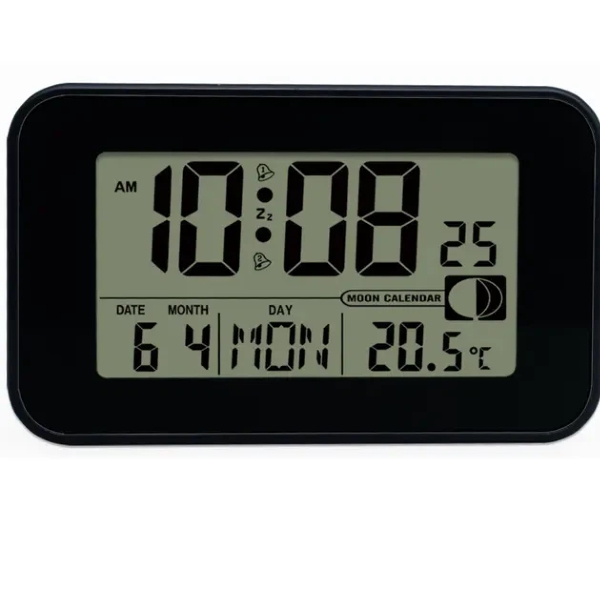
A digital clock is a timekeeping device that displays the time numerically rather than with hands. This type of clock uses a digital display, most commonly based on LED or LCD technology, to show the hours, minutes, and often seconds, in numerical digits. For example, a digital clock would display 12:30 for half-past twelve, which makes it easier for people to read and understand the time quickly.
Digital clocks have become a standard in homes, offices, and even public spaces. The main advantage of a digital clock is the simplicity of its display and the ease with which users can read the time. With the rise of smart technologies, digital clocks now feature additional functionalities, making them much more than just time-keeping devices.
At the core of a digital clock lies an electronic oscillator, often powered by a quartz crystal, which generates regular signals. These signals are then processed by the clock’s microprocessor and displayed numerically on a screen. The accuracy and precision of digital clocks are among their greatest advantages, with some models offering extreme precision down to the fraction of a second.
Since these clocks are powered either by a power outlet or batteries, they do not require winding or manual intervention like mechanical analogue clocks. In fact, most digital clocks are highly reliable, providing continuous, error-free timekeeping until their power source is exhausted.
Some of the most popular features of digital clocks include:
Backlighting: Most digital clocks come equipped with a backlight, which enhances readability, especially in low-light environments or during the night.
Multiple Time Formats: Users can easily switch between 12-hour or 24-hour time formats, making these clocks versatile for different needs and preferences.
Alarm Functionality: A major advantage of digital clocks is their built-in alarm system. Many offer customizable alarms with different tones, snooze functions, and volume controls.
Temperature and Humidity Displays: Some advanced digital clocks provide additional functionalities such as indoor temperature and humidity readings, making them useful in maintaining comfortable living conditions.
Smart Features: Many modern digital clocks are smart devices that can sync with your smartphone, integrate with your home automation system, or even respond to voice commands.
An analogue clock is the traditional form of time-keeping that uses a rotating dial with hour, minute, and sometimes second hands. These hands rotate around a numbered clock face, which indicates the current time. Analogue clocks are powered by either a battery or a mechanical winding mechanism (for older, non-battery clocks).
The hands on the clock are used to indicate the passage of time in a circular fashion, with the hour hand indicating the hours, the minute hand pointing to the minutes, and the second hand continuously sweeping around to indicate seconds. Analogue clocks have been in existence for centuries, and despite the rise of digital clocks, they remain a staple in homes, offices, and public spaces due to their classic design and simplicity.
The movement of the hands in an analogue clock is driven by a mechanical system or a quartz movement. In a mechanical analogue clock, a spring is wound to store energy, which is released gradually to power the movement of the hands. In a quartz analogue clock, an electric current passes through a quartz crystal, causing it to vibrate and produce a consistent frequency that drives the movement of the clock hands.
The gears in the clock system translate the quartz vibrations or mechanical spring release into the movement of the hands on the dial. The rotation of the minute hand is synchronized with the hour hand and second hand, making it an intuitive way to track time visually.
Here, we will compare digital clocks and analogue clocks across several features, emphasizing their distinctions.
Feature | Digital Clocks | Analogue Clocks |
Time Display | Time is displayed numerically (e.g., 12:30). | Time is displayed using rotating hands on a dial. |
Ease of Reading | Easy to read at a glance, especially for young children or those with vision difficulties. | Requires an understanding of the clock face and hands, which may be more difficult for children or individuals unfamiliar with it. |
Design | Modern and sleek design, often minimalistic and compact. | Classic and traditional, with a wide variety of artistic and decorative designs. |
Power Source | Usually powered by electricity or batteries. | Can be powered by batteries or mechanical movement (winding). |
Additional Features | Often come with extra features such as alarms, temperature displays, and even Bluetooth functionality. | Primarily focused on displaying time without additional functionalities. |
Accuracy | More accurate with digital precision. | May be less precise, especially in mechanical models. |
Suitability | Ideal for modern settings, offices, and tech-savvy environments. | Ideal for traditional and decorative settings. |
The primary difference between digital clocks and analogue clocks is the way time is presented:
Digital Clocks: Use numerical digits to display time, making them more straightforward and easier to read at a glance.
Analogue Clocks: Use rotating hands to represent time, which requires users to interpret the position of the hands relative to the numbers on the dial.
Digital Clocks: Because digital clocks display the time in a numerical format, they are easier for people to read quickly, especially in fast-paced or critical settings.
Analogue Clocks: While analogue clocks offer an elegant, traditional method of telling time, they can be more difficult to read for those not familiar with reading clock faces.
Digital Clocks: Digital clocks often feature sleek, modern designs and come in a variety of styles, from simple LED displays to complex smart clocks.
Analogue Clocks: Analogue clocks are known for their timeless aesthetic and come in many decorative styles. From vintage designs to ornate and intricate mechanisms, analogue clocks are often used as decorative elements in homes or offices.
When deciding between a digital clock and an analogue clock, there are several factors to consider. The choice typically depends on your lifestyle, preferences, and where you plan to use the clock.
Reading Ease: If you need a clock that is easy to read at a glance, especially for children or older adults, a digital clock might be the better choice.
Design Preferences: If you're looking for something with a classic look, an analogue clock may be a more suitable option for your needs.
Additional Features: If you want extra features like alarms, temperature displays, or smart functionality, a digital clock is likely the better option.
Bedside Tables: Due to their ease of use and alarm features, digital clocks are perfect for use in bedrooms.
Offices: Digital clocks are highly suitable for office settings where precise timekeeping and modern features are required.
Public Spaces: Digital clocks are commonly used in public places such as airports, train stations, and schools because they offer clear visibility and precision.
Traditional Offices: Analogue clocks are often preferred in formal and traditional office settings for their classic design.
Home Décor: Many homeowners use analogue clocks as decorative items, choosing designs that complement their home’s style.
Public Spaces: Some schools and libraries still use analogue clocks due to their educational value and simplicity.
Digital clocks come in a variety of types, each designed to suit specific needs.
Digital alarm clocks are popular for personal use and typically include features like adjustable alarms, snooze buttons, and customizable sounds.
Digital wall clocks are ideal for larger spaces such as classrooms, offices, or public buildings, offering large displays for easy time reading.
The latest innovation in digital clocks are smart clocks, which integrate with other devices, provide voice control, and can sync with your mobile devices for calendar and weather updates.
Both digital clocks and analogue clocks offer distinct advantages, making them suitable for different needs and environments. Digital clocks are known for their accuracy, modern functionalities, and ease of use, offering features like alarms, temperature displays, and adjustable time formats. These qualities make them ideal for contemporary settings, offices, and personal use, where precision and convenience are essential. On the other hand, analogue clocks carry a timeless appeal with their traditional aesthetic, perfect for classic or formal settings, such as traditional offices or home décor.
When deciding between the two, it's important to consider factors like design preferences, desired features, and the specific environment where the clock will be used. Whether you need the sleek, modern appeal of a digital clock or the elegant, classic look of an analogue clock, the choice should align with your personal style and functionality needs.
At Fuzhou Greathome Manufacture Co., Ltd., we offer a wide range of high-quality digital clocks designed to suit any environment. Our products come with innovative features, ensuring you find the perfect timekeeping solution that fits your requirements. Feel free to reach out to us to explore our extensive range of clocks and discuss your needs further.
1. What are the main advantages of a digital clock?
Digital clocks are easy to read, precise, and often come with additional features like alarms and temperature displays.
2. Can an analogue clock be more accurate than a digital clock?
Digital clocks tend to offer more precise timekeeping due to their electronic components, but analogue clocks with quartz movements are still quite accurate.
3. Are digital clocks more expensive than analogue clocks?
Digital clocks can be more expensive due to their added functionalities, but both types offer a wide range of pricing options.
4. Do digital clocks require more maintenance than analogue clocks?
Digital clocks may require more maintenance due to electronic components, but they generally need less intervention than mechanical analogue clocks.
5. Can I use a digital clock in outdoor settings?
Yes, some digital clocks are specifically designed for outdoor use and come with weather-resistant features.
6. Which is better for kids: a digital or analogue clock?
Digital clocks are generally easier for kids to read, making them a better choice for children.


