Views: 0 Author: Site Editor Publish Time: 2026-03-17 Origin: Site

In our fast-paced, technology-driven world, time is of the essence. Whether in personal life or business operations, being punctual and precise is essential, and the digital clock has played a monumental role in this regard. Unlike its mechanical predecessor, the analog clock, which uses rotating hands to indicate the passage of time, the digital clock represents time in a clear, easily readable numerical format. It provides a more efficient and straightforward approach to timekeeping.
The evolution from the traditional mechanical clock to the digital clock highlights significant advancements in electronic and display technology. Today, digital clocks are integral in nearly every modern device, from wristwatches and home appliances to smartphones, computers, and even kitchen timers. The simplicity, clarity, and functionality of digital clocks have made them ubiquitous in daily life, replacing many traditional analog clocks across the world.
This article aims to trace the origins of the digital clock, highlight the key figures and inventions that led to its development, and explore its profound impact on the way we track time.
Before digital clocks were even a concept, timekeeping was entirely reliant on mechanical systems. These clocks used gears, springs, and pendulums to track time and were often bulky, difficult to maintain, and prone to inaccuracies over time. However, mechanical clocks laid the foundation for future timekeeping systems, including the digital clock.
In the early 20th century, as electrical and electronic technologies began to emerge, engineers started experimenting with ways to represent time electronically. Innovations in vacuum tube technology marked the beginning of electronic timekeeping, but it wasn’t until transistor technology became available that digital clocks began to take shape in a form more recognizable today.
The idea of a digital time display, where numbers were displayed electronically instead of with moving hands, began in the 1920s and 1930s. However, it was only in the 1950s that engineers and scientists began developing the first digital clocks using electronic circuits.
The introduction of vacuum tube technology provided a means of creating the first rudimentary digital displays, which were large, power-hungry, and not ideal for widespread use. These early clocks required significant amounts of electricity to run and were often impractical for personal use, but they sparked the imagination of engineers, opening the door for further development in the field of digital timekeeping.
The digital clock was not the result of a single inventor's work. It emerged as a collaborative effort by various engineers and inventors who contributed key technologies, ideas, and patents. Below are the key figures whose contributions helped shape the development of the digital clock:
Jean Léon Raguet, a French engineer, is often regarded as one of the pioneers in the development of the digital clock. His work in the late 1950s led to the first electronic digital clock using electronic circuits to display time numerically. Raguet's contributions were foundational, though the technology remained relatively primitive by modern standards.
While Raguet laid the groundwork for the digital clock, it was Willis H. Ware, an American engineer, who brought the technology into the public consciousness. Ware, through his work with the U.S. Department of Defense in the late 1950s and early 1960s, refined the technology and produced a more reliable version of the digital clock that was practical for everyday use. Ware's work in electronic timekeeping and digital circuit design helped revolutionize the concept of digital time displays, bringing them closer to mass-market production.
Ware's most significant achievement was creating a more reliable electronic digital clock that could be used in homes and industries. His designs included the first commercially viable LED-based digital clocks, a massive improvement over earlier models using vacuum tube displays.
Other key figures, including John Bardeen and Walter Brattain, whose work on the transistor revolutionized electronics, played a major role in making the digital clock smaller, cheaper, and more accessible. The development of transistor technology allowed digital clocks to become more reliable and cost-effective, opening the door for mass adoption.
The development of the digital clock was closely tied to advances in electronics, displays, and miniaturization technology. Here's a more detailed look at the key milestones that marked the evolution of the digital clock:
Year | Milestone | Technology/Advancement |
1927 | First Digital Time Display | The concept of digital clocks is first explored. |
1950s | Vacuum Tube Clocks | Early digital clocks used vacuum tubes for time display, but were large and inefficient. |
1960s | Transistor-Based Clocks | The invention of transistors allowed for smaller, more reliable digital clocks. |
1970s | LED Displays | Digital clocks began using LED (Light Emitting Diode) displays, marking a significant improvement in energy efficiency and visibility. |
1980s | LCD and Quartz Technology | LCD (Liquid Crystal Display) technology and quartz crystals enabled precise, compact, and efficient digital clocks. |
2000s | Smart Clocks | Introduction of smart digital clocks, integrating internet connectivity and additional functionalities. |
In the 1960s, as the digital clock evolved, the vacuum tube technology that had been used in earlier models was replaced by LED (Light Emitting Diodes). These diodes provided a more efficient way to display the time, using far less power than vacuum tubes and offering clearer visibility. By the 1970s, LED-based digital clocks were common in homes and public spaces due to their practicality.
In the 1980s, LCD (Liquid Crystal Displays) began to take over as the preferred display technology for digital clocks. LCDs were more power-efficient and could be used in smaller, more compact devices. This change also allowed digital clocks to become integrated into a variety of consumer electronics, including calculators, microwaves, and wristwatches.
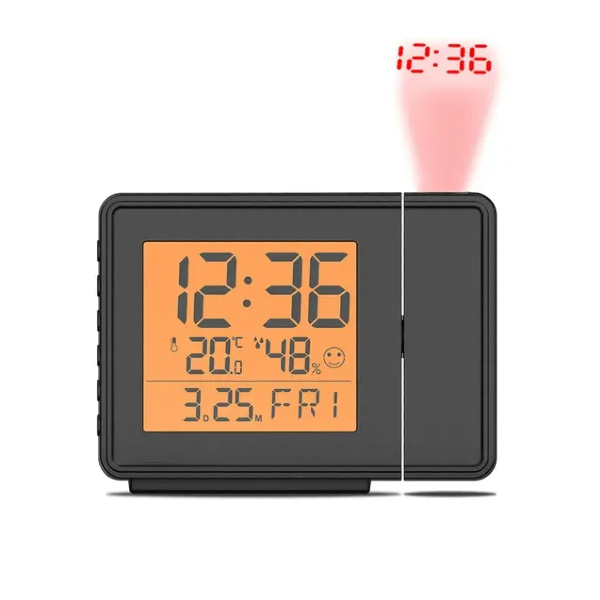
While the idea of a digital clock existed in various forms since the early 20th century, it wasn't until the 1960s that the first patents for digital clocks were filed. Willis H. Ware, one of the key figures in the development of digital clocks, was granted a patent for a digital clock in 1960. This patent covered the electronic circuits and display technologies that made digital clocks commercially viable.
The introduction of the patent system for digital clocks marked the beginning of large-scale production, as manufacturers could now legally produce and sell digital clocks to the public. This allowed digital clocks to become a mainstream product.
The digital clock was a major turning point in the way we measure and interact with time. Before digital clocks, most timekeeping devices were either mechanical or analog, requiring careful calibration and maintenance. The simplicity of the digital clock made it accessible and reliable, providing people with an easier way to check time.
Aviation: In aviation, digital clocks were essential for synchronized flight schedules and precise navigation, where even small discrepancies in time could lead to disastrous consequences.
Manufacturing: The digital clock was crucial in industries like manufacturing, where accurate timekeeping was necessary for productivity and efficiency.
Computing: As computers began to emerge in the 1960s and 1970s, digital clocks became indispensable for time synchronization within computer systems, ensuring that processes were executed in sync.
Households: In the 1970s and 1980s, digital clocks became a fixture in households, replacing many mechanical clocks. Their clarity and ease of use made them ideal for the kitchen, living room, and bedrooms.
Public Spaces: Digital clocks quickly became a standard feature in public spaces like airports, train stations, and sports stadiums. Their bright, easily visible displays made it easier for people to check the time from a distance.
As technology continued to advance, the digital clock became even more integrated into the digital age. The rise of smartphones, wearables, and smart homes has made digital clocks even more ubiquitous.
The smartwatch and smartphone revolution in the 2000s brought digital clocks into the realm of smart devices. Today, most smartwatches feature digital clock displays, often incorporating multiple time zones, alarms, and fitness tracking. The integration of digital clocks into smartphones allows users to quickly check the time, set reminders, and even control alarms.
In smart home systems, digital clocks now serve as the backbone for time-based operations. Whether it’s syncing up with home automation schedules or controlling home appliances, digital clocks play a key role in making homes more intelligent.
Digital clocks have also become embedded in appliances such as microwaves, refrigerators, and coffee makers, providing users with convenience and greater control over their daily routines.
The digital clock has revolutionized our relationship with time, evolving from early models powered by vacuum tubes and transistors to today's sophisticated LED and LCD displays. This innovation has significantly impacted industries, daily life, and the progression of technology. As we embrace the digital era, digital clocks continue to play an essential role in our routines, providing not only precise timekeeping but also offering features that improve convenience, accessibility, and functionality.
At Fuzhou Greathome Manufacture Co., Ltd., we take pride in offering high-quality digital clocks that cater to a wide range of applications, from household use to industrial environments. Our advanced clocks incorporate the latest technologies, ensuring superior performance and reliability. Whether you need a clock for your home, office, or other professional settings, we provide products designed to meet your unique requirements.
If you're looking for innovative and reliable digital timekeeping solutions, we invite you to explore our products. Our team is ready to assist you with any inquiries and guide you in selecting the perfect digital clock for your needs. Contact us today to learn more about how we can support your timekeeping needs.
1. When was the first digital clock invented?
The first digital clock was invented in the late 1950s, with various engineers contributing to its development.
2. Who is credited with inventing the first digital clock?
Willis H. Ware is credited with inventing the first commercially successful digital clock.
3. What is the difference between an analog and a digital clock?
Analog clocks use moving hands to indicate the time, while digital clocks use numerical displays to show the time.
4. Why are digital clocks so important?
Digital clocks are important because they provide clear, easy-to-read time displays, which are accurate and versatile for use in many settings.
5. What technologies are used in digital clocks today?
Today’s digital clocks use technologies such as LED, LCD, and OLED displays, often integrated with features like alarms, timers, and synchronization with other smart devices.


