


| Quantity: | |
|---|---|
It solves key pain points like “missed time alerts” and “complex rule recall”:
Professional Tournaments: In large-scale events (e.g., national chess championships), the human voice countdown (e.g., “10, 9, ..., 1—time out”) eliminates disputes over visual misreads. The “timeout announcement” ensures all players and referees acknowledge expired time, maintaining fairness.
School Chess Courses: For teachers training 30+ students, the simple “rule selection dial” (6 core rules: lump sum, extra seconds, etc.) reduces setup time. The voice prompts help students focus on moves instead of checking the timer constantly.
Senior Chess Clubs: Elderly players benefit from loud, clear voice alerts (adjustable volume) and large, easy-to-read buttons, solving issues with poor eyesight or hearing. The “count count time” function tracks total game duration for post-match analysis.
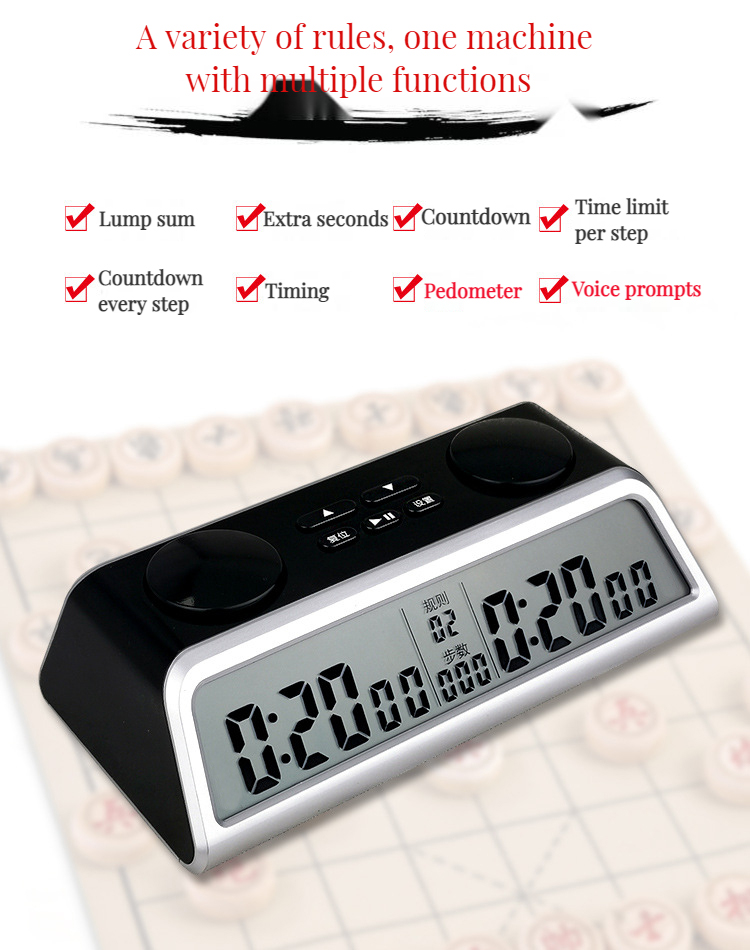
Human-Centered Design: The 17.5cm × 8.5cm × 5cm size fits most hands, with raised “confirm” and “reset” buttons for blind operation. The display uses 12mm large digits, readable from 4m away (perfect for classroom settings).
Durable Construction: Made of high-density ABS plastic (resists yellowing) and a metal-reinforced button panel, it withstands frequent pressing (10,000+ presses tested). The power switch is dust-proof, suitable for long-term use in clubs.
Parameter | Value |
Brand | Greathome |
Product Name | Intelligent Voice Chess Clock |
Dimensions (L×W×H) | 17.5cm × 8.5cm × 5cm |
Weight | 220g (without batteries) |
Power Source | 2 × AAA batteries (not included) |
Voice Features | Human voice countdown, timeout announcement |
Rules & Presets | 6 rules, 12 presets |
Memory Function | Power-off memory (saves 5 custom rules) |
Applicable Games | Chess, Go, Chinese Chess, Checkers |
Display Digit Size | 12mm (LCD) |
Key Buttons | Reset, Pause, Rule Selection, Volume Adjust |
Voice Customization: For bulk orders (e.g., national tournaments), we offer custom voice prompts (e.g., local language or brand slogans).
Training & Maintenance: Free online training sessions for referees or teachers (covering rule setup and troubleshooting). Replacement parts (e.g., speakers, buttons) are available at factory prices.
Warranty: 18-month warranty (longer than industry average) with free repair for non-human damage.


